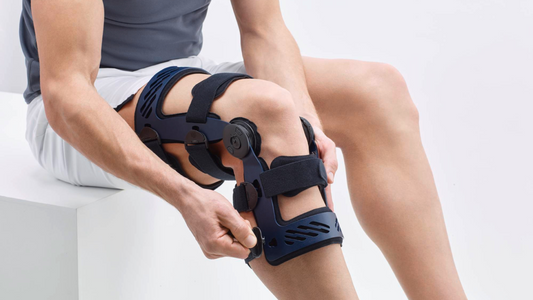

The Brace Taking a Break in the Drawer
Every clinician has had this conversation. A patient comes back for review, their progress has stalled, and somewhere in the conversation comes the admission that they haven’t really been wearing their brace.
Rarely is this because they disagree with the treatment plan. More often, the brace slipped during the day, dug in behind the knee, got too hot to bear, or just didn't fit comfortably into their routine. And so it ended up in a drawer, which is, clinically speaking, the one place a brace can't do its job.
The gap between what a device is capable of and what it delivers is bigger than most people assume. Research into musculoskeletal rehabilitation puts patient adherence to prescribed programmes between 30% and 70%, a wide enough range to explain why two patients with near-identical injuries and near-identical braces can walk out of rehab with very different outcomes.
The good news is that this isn't a motivation problem clinicians have to solve through better lectures. It's substantially a design problem, and one that can be engineered around.
The Weight of Non-Adherence
It's tempting to read poor adherence as a patient not taking their recovery seriously when the opposite is usually true. Patients want to get back to work, to sport, to picking up their kids without wincing. What derails them is rarely the injury itself but the accumulation of small frictions that make the brace harder to live with than the symptoms it's meant to manage.
Studies looking specifically at why patients abandon limb bracing point to two dominant reasons: discomfort (36.4% of cases) and irritation during sleep (18.8%). The brace may not fail to stabilise the joint, but it may be difficult to tolerate for the hours it needs to be worn.
Therefore, the fix isn't asking patients to push through discomfort in the name of compliance. It's removing the discomfort before it becomes a reason to stop.
Patients Don't Reject Treatment. They Reject Barriers.
There's a psychological layer here too, and it's worth understanding because it shapes how you frame the brace to your patient, not just which one you choose.
Social Cognitive Theory identifies self-efficacy (a patient's belief that they're capable of doing what recovery requires) as one of the strongest predictors of whether they'll stick with a rehabilitation plan. A brace that slips, pinches, or overheats annoys and erodes their confidence that the plan is working. A brace that feels secure like a second skin does the opposite. It reinforces the idea that they can move, that the joint is supported, and that doing the exercises you've prescribed is worth the effort.
In other words, comfort is part of how the clinical function gets delivered, because a brace that stays on is the only version of the brace that works.
Every Hour Off Is an Hour the Brace Isn't Working
Whatever a brace is prescribed to do—stabilise a ligament, guide range of motion, manage swelling through compression, support proprioception—it can only do it while it's on the patient. That sounds obvious written down, but it's easy to lose sight of in a follow-up appointment focused on symptoms rather than wear time.
Emerging research following patients through ligament rehabilitation shows that adherence is shaped by comfort, pain levels, brace settings, and the patient's confidence in the device from one week to the next. Adherence is something a well-designed brace can preserve throughout the entire course of treatment, precisely because the patient never has a strong reason to stop wearing it.
Built to Be Worn: The Engineering Behind Tolerability
This is where the conversation moves from psychology to materials, because comfort at this level is engineered, deliberately, into every part of the brace.
A Fit That Stays On
Brace migration is one of the fastest ways to lose a patient's trust in a device. If a support slides down the leg every time they climb a flight of stairs, they stop trusting it to do its job and start adjusting it constantly. Bauerfeind's knitted supports are shaped to the natural contours of the leg specifically to keep that from happening.
Pressure Taken Off
The back of the knee is one of the most common places patients report irritation, because it's under constant mechanical stress every time the joint bends. Anatomical soft zones, like the integrated expansion zone behind the knee, are built to flex with the joint rather than against it, so the fabric doesn't bunch or pinch through a full range of motion.
Heat That Doesn't Build Up
A brace that turns into a sauna by mid-afternoon is a brace that comes off by mid-afternoon. Bauerfeind's patented Train knit is engineered for breathability and moisture-wicking, so thermoregulation holds up whether the patient is at a desk, on a worksite, or working through a rehab session.
Making Rehabilitation Feel Achievable
Ultimately, patients are more likely to engage with rehabilitation when their brace feels like an aid rather than an obstacle. A comfortable brace encourages confidence during walking, climbing stairs, completing physiotherapy exercises, and gradually returning to everyday activities.
(K)need-to-Know: Inside the Knee Collection
The knee range is Bauerfeind's highest-volume category for a reason because it’s in these products where users have felt the link between comfort and compliance.
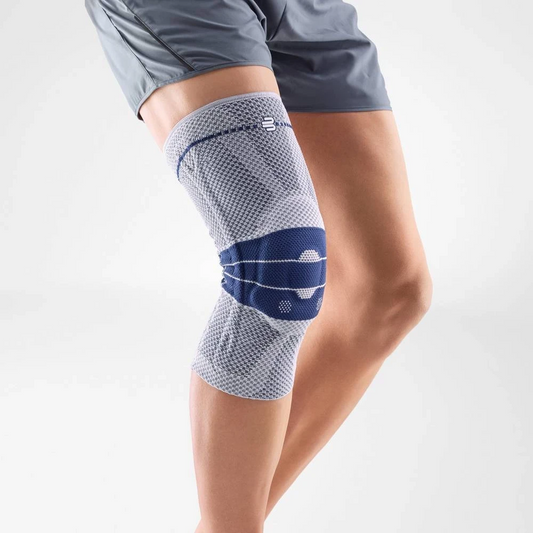
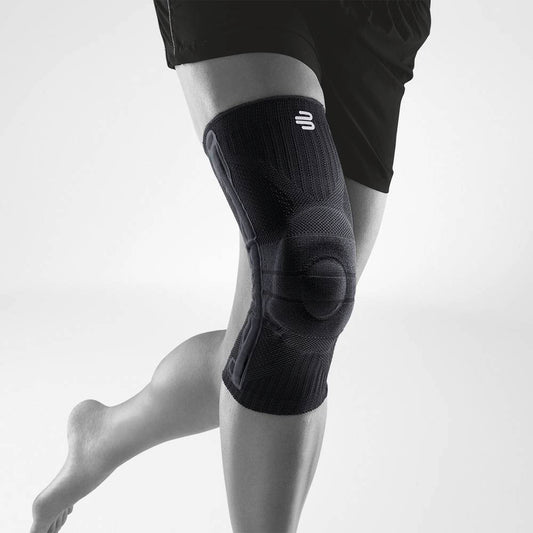
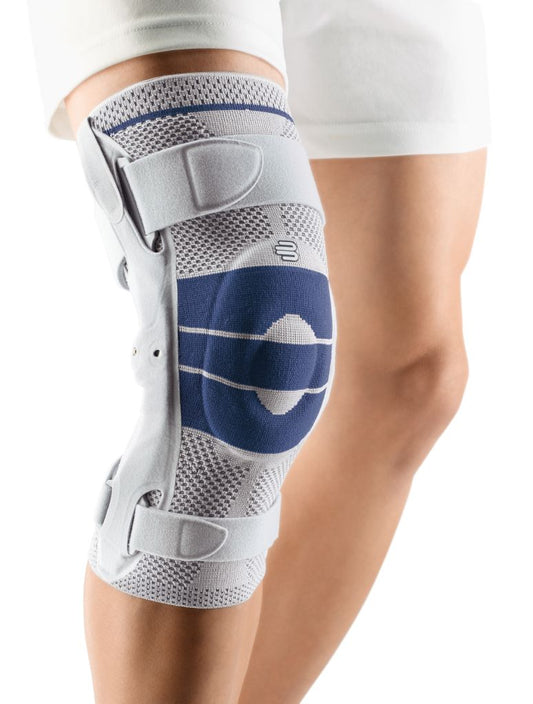
The GenuTrain Knee Braces use medical-grade graduated compression (Ccl2) to support circulation and reduce the muscular fatigue that often discourages early movement. Because it holds its position and moves with the joint rather than against it, patients are more willing to stay active on it. Early, confident mobilisation is one of the better ways to head off the deconditioning that comes with guarding an injury.
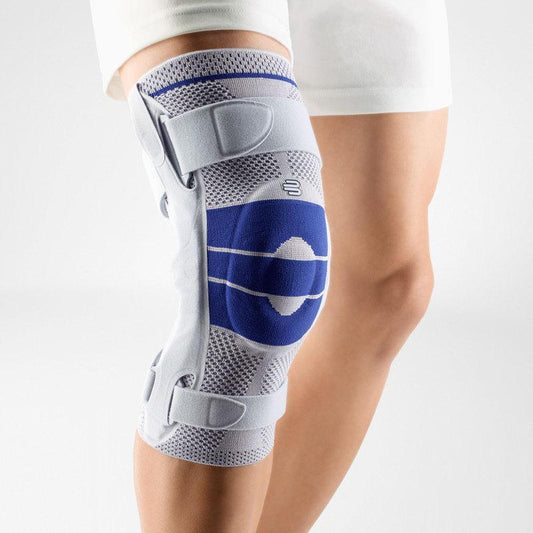
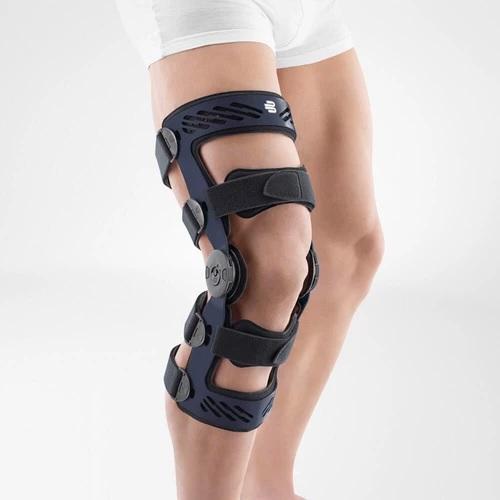
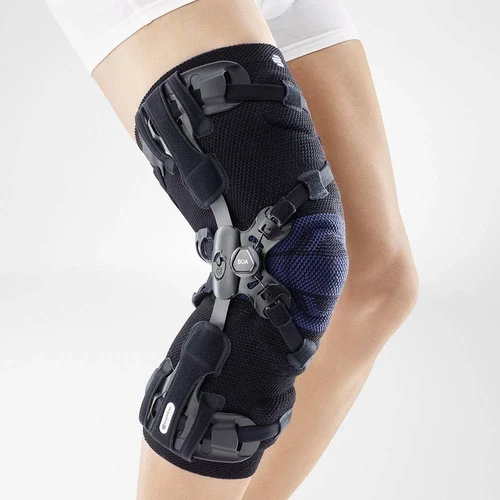
For more complex cases (post-ACL reconstruction, for example), the SecuTec Genu Knee Braces have a lightweight, adaptable aluminium frame with streamlined microfibre padding instead of the bulk and pressure that come with older rigid braces. It's also the brace of choice among clinicians running the Cross Brace Protocol, largely because patients tolerate it well enough to stay compliant through a 12-week (or modified 8–10 week) recovery, which is a long time to ask anyone to wear something that doesn't fit properly.
No Two Knees Alike
Every clinician has fitted a brace to a leg that didn't quite match the size chart because of a thicker calf, post-surgical swelling, or a conical thigh. Ill-fitting braces are one of the leading causes of both slippage and the pressure points patients complain about, and no amount of good fabric engineering fixes a brace that's simply the wrong shape for the person wearing it.
Bauerfeind's sizing system is built from measurements taken from more than 500,000 people in order to not just offer more sizes but also to give clinicians a genuine shot at matching an unusual anatomy correctly the first time rather than sending a patient home with something that needs adjusting, re-measuring, or replacing two weeks in.
Why the Right Brace Matters to Your Practice and Your Patient
There's an upside here that's easy to overlook in the middle of a busy clinic day. A brace a patient wears means fewer follow-ups spent troubleshooting fit instead of assessing progress, fewer patients quietly abandoning a plan without telling you, and more confidence for both of you that the outcome you're seeing reflects the treatment. Comfort-led design helps the patient and protects the integrity of your clinical decision-making, because you're seeing the effect of the plan you prescribed.
Better Adherence Starts with Better Design
When a patient trusts their brace, they tend to trust their clinician's plan a little more too. A support that feels secure from the first fitting sends a signal that the rest of the treatment has been thought through with the same care, and that's not a small thing when you're asking a patient to commit to weeks or months of exercises, reviews, and gradual return to activity.
Partnering for Better Outcomes
Prescribing well depends on more than choosing a good product off a shelf. It depends on having the right support around that choice, including fitting guidance, current sizing information, and a manufacturer who treats clinicians as partners in the outcome rather than customers at the end of a supply chain.
The Bauerfeind Partner Program gives healthcare professionals access to clinical education, fitting training, virtual consultations, and a product range built on the same evidence-based approach outlined here, whether you're working in physiotherapy, sports medicine, orthopaedics, or general practice. It's designed for clinicians who want a manufacturer that shows its working, not just its catalogue.
Bottom Line
The question worth asking isn't only "Will this brace provide the right clinical support?" It's "Will my patient still be wearing it next week?" Fit, fabric, pressure management, and sizing aren't separate from clinical outcomes. They're the mechanism through which those outcomes happen, because a brace only helps a patient recover for as long as they're willing to keep it on.
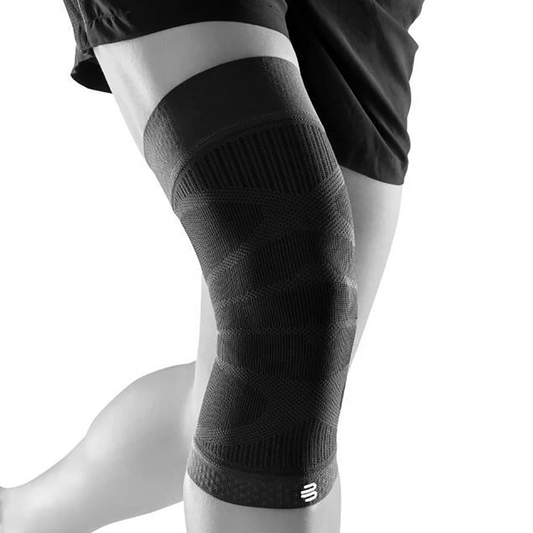
Explore Bauerfeind's Knee Collection to see how comfort-led engineering supports better adherence from day one, or explore the Sports Compression range for patients returning to activity and sport.